
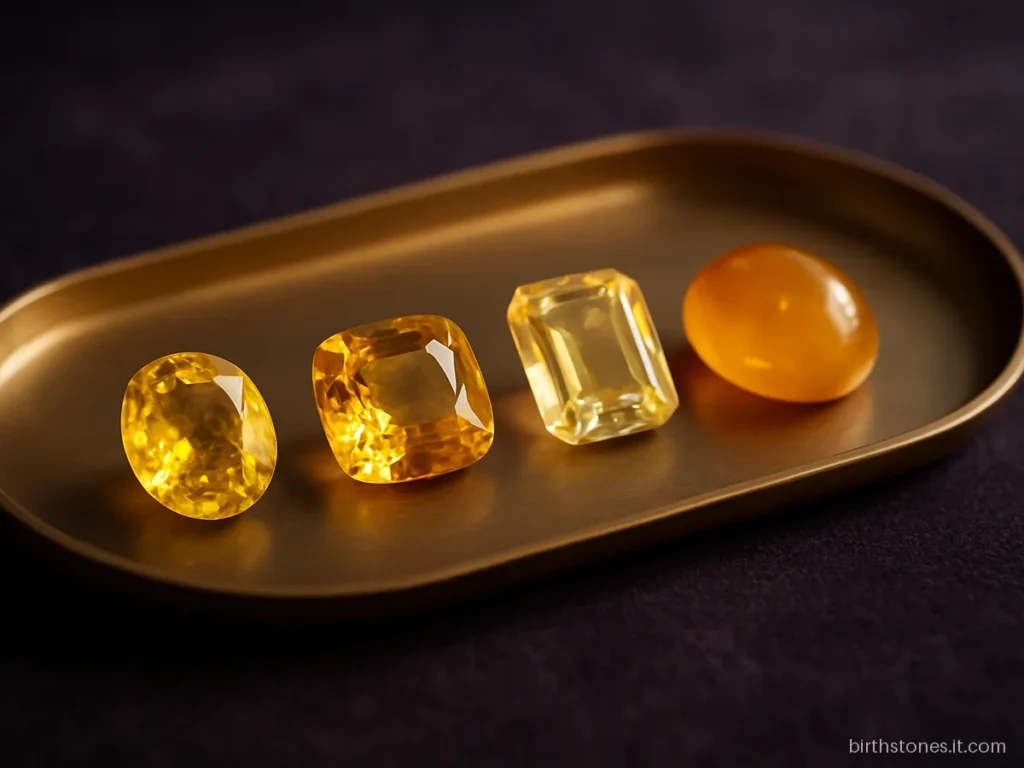
The yellow stone name most Indians know is pukhraj, the yellow sapphire, but a jeweller's tray can also hold sunela (citrine), yellow topaz, kahruba (amber), honey chrysoberyl, yellow zircon, heliodor and golden tourmaline. They range from pale lemon to deep golden honey.
Many of them look alike, and some are sold as pukhraj when they are not. This page lists each yellow gemstone with its Hindi name and hardness, explains which ones astrologers use as substitutes, and gives simple checks for telling them apart.
How to sort a yellow stone on the tray
- Check the hardness clue
Sapphire and topaz keep sharp, glossy facet edges for years. Citrine and zircon show tiny scuffs sooner. Amber is noticeably featherweight.
- Look at the colour in daylight
Pukhraj often has a pure canary or golden yellow. Citrine leans orange or brownish. Yellow topaz can show a slight peach tint.
- Look for silk and inclusions
Natural yellow sapphire often holds fine needles or colour bands under a 10x loupe. Glass shows round bubbles and swirls.
- Weigh the stone
Sapphire is heavier than citrine of the same size. A jeweller with a gauge and scale can compare the two quickly.
- Get pukhraj tested by a lab
If the stone is sold as yellow sapphire, an outside lab report confirms the species and whether it has been heated.
Yellow stone name table: English, Hindi, mineral
This yellow gemstone name table covers what you are likely to see in Indian shops and crystal stores.
| Gem | What Indian sellers call it | Mineral | Mohs |
|---|---|---|---|
| Yellow sapphire | Pukhraj | Corundum | 9 |
| Yellow diamond | Peela heera | Diamond | 10 |
| Chrysoberyl | Sunehri lahsuniya when it shows an eye | Chrysoberyl | 8.5 |
| Yellow topaz | Topaz, often sold as sunela | Topaz | 8 |
| Heliodor | Peela beryl | Beryl | 7.5 to 8 |
| Yellow tourmaline | Peeli tourmaline | Tourmaline group | 7 to 7.5 |
| Citrine | Sunela | Quartz | 6.5 to 7 |
| Tiger's eye | Tiger stone | Quartz | 6.5 to 7 |
| Yellow zircon | Peela jarkan | Zircon | 6 to 7.5 |
| Amber | Kahruba | Fossil tree resin | 2 to 2.5 |
Hessonite (gomed) is often honey yellow to orange brown, so it sometimes sits with yellow stones in a tray, but in Jyotish it is a separate gem linked with Rahu. See gomed for that stone.
Pukhraj, the main yellow gemstone in Jyotish
Jyotish ties pukhraj to Jupiter (Guru), and it is and one of the nine navratna stones. It is believed to support wisdom, teaching, family life and good fortune, though no gem can promise results. Custom places it in a gold ring for the index finger, starting on a Thursday. The right stone, its ratti or carat and the start date belong to a chart reading by an astrologer you trust.
Because good pukhraj is costly and often faked, read how to check original pukhraj before buying.
Substitutes for pukhraj: sunela and yellow topaz
When pukhraj is out of budget, many astrologers suggest an upratna. The two most common are citrine, known as sunela, and yellow topaz. Some lists also mention yellow zircon or yellow tourmaline. Astrologers differ on these lists.
| Feature | Pukhraj (yellow sapphire) | Sunela (citrine) | Yellow topaz |
|---|---|---|---|
| Hardness | 9 | 6.5 to 7 | 8 |
| Typical colour | Lemon to golden canary | Pale yellow to orange brown | Light yellow to golden, sometimes peach |
| Common treatment | Heating | Heating of amethyst or smoky quartz | Usually untreated or heated |
| Jyotish role | Main navratna gem | Upratna | Upratna |
Sellers sometimes use the word sunela loosely for any yellow quartz or topaz, so ask which mineral you are being offered.
Other yellow stone gem choices
- Chrysoberyl: a hard, bright yellow to greenish yellow gem. When it shows a sharp line of light, it becomes the cat's eye that Jyotish calls lahsuniya; see cat's eye stone.
- Heliodor: golden beryl, a sister of emerald and aquamarine, usually very clean.
- Yellow diamond: rare in strong colour and costly; a good share of what shops show has been colour treated or grown in a lab.
- Amber: not a mineral at all, but hardened tree resin. Light, warm to touch and soft.
- Tiger's eye: honey and brown stripes with a silky shimmer that slides as you tilt it; popular for beads and in crystal practice.
- Yellow jasper and calcite: opaque stones used in crystal shops, not in fine jewellery.
How to tell yellow gems apart
Glass and citrine are the most common stones passed off as pukhraj. A few signs help a buyer, though only a lab can confirm species.
| Check | Yellow sapphire | Citrine | Glass |
|---|---|---|---|
| Under a 10x loupe | Fine needles, colour zones | Mostly clean, sometimes wisps | Round bubbles, swirl lines |
| Facet edges | Stay sharp | Slightly rounded with age | Chip and scratch quickly |
| Weight in hand | Heavy for its size | Lighter | Varies |
| Feel | Cool for some time | Cool | Warms quickly |
A dealer can also measure how the stone bends light with a small instrument called a refractometer. That reading alone separates sapphire, topaz and quartz.
Yellow gemstones and birthstone months
Most modern charts give topaz as the November birthstone, with citrine as its partner, which is why yellow stones are popular gifts that month. Western zodiac lists for Scorpio usually repeat the same pair. In Jyotish, Dhanu and Meen are Jupiter's rashis, yet a person's rashi is read off the Moon's position in the kundli; a calendar month cannot reveal it. Gift buyers who simply want a sunny colour for a November birthday can choose either topaz or citrine without any astrology at all. The November birthstone page has the details.
Caring for yellow stones
Pukhraj and topaz are fine in a cup of warm, lightly soaped water and a soft brush. Topaz can split if knocked hard, so avoid wearing it while doing heavy work. Citrine may fade a little after long, strong sunlight, so a closed drawer is the right home for it. Amber needs nothing more than a moist cotton wipe, and it must stay clear of perfume, sanitiser and heat. Keep each stone in its own pouch because a sapphire will happily scratch a citrine sitting next to it.
Questions people ask
Which yellow stone name comes up in astrology?
Pukhraj, the yellow sapphire, is the yellow gem of the navratna set and is linked with Jupiter. Citrine (sunela) and yellow topaz are common substitutes.
What is sunela stone?
Sunela is what Hindi speakers call citrine, the lemon to tangerine member of the quartz family. Some sellers also use it loosely for yellow topaz, so ask which mineral it is.
Which yellow gemstone is the hardest?
Yellow diamond at 10, followed by yellow sapphire at 9 and chrysoberyl at 8.5. Topaz is 8, while citrine is 6.5 to 7.
Is citrine the same as pukhraj?
No. Citrine is quartz and pukhraj is corundum. They can look alike, but sapphire is much harder and heavier.
What is kahruba?
Kahruba is the name used in India for amber, a fossil tree resin. It is very soft and light and needs gentle care.
Which yellow stone gem is good for daily wear?
Yellow sapphire and yellow topaz handle daily wear best because of their hardness. Citrine is fine with some care, and amber is better for occasional use.