
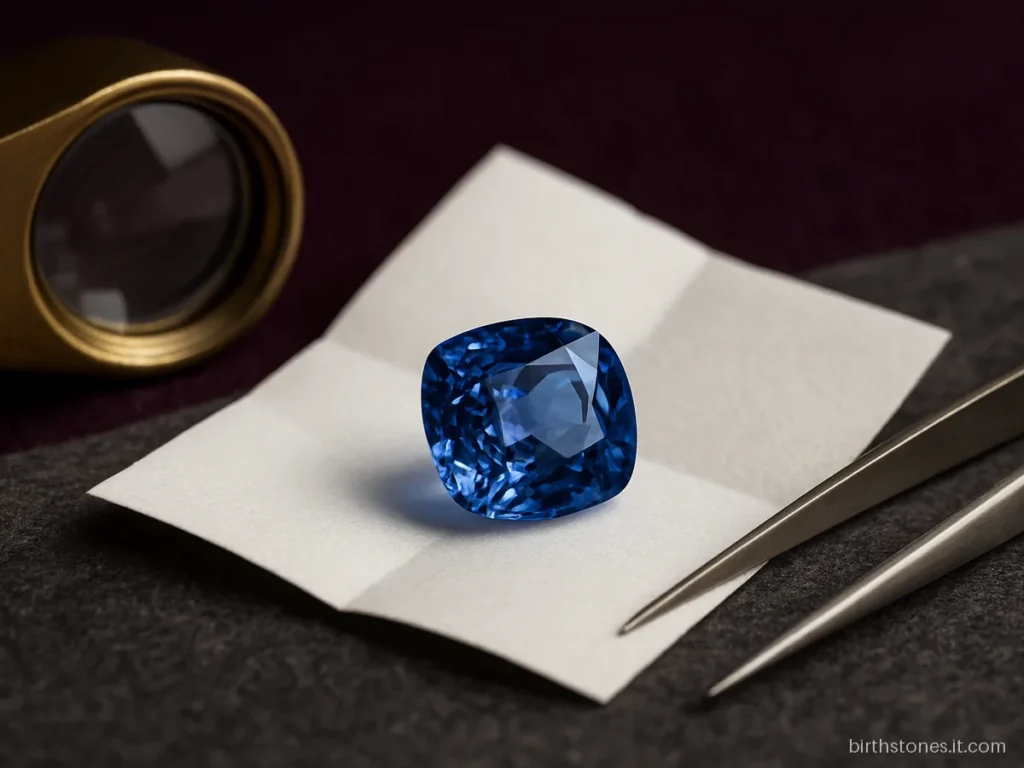
A sapphire stone price is set mainly by colour, then by clarity, size in carat or ratti, cut, treatment and whether nature or a factory made it. Two blue stones of the same weight can differ many times over because of these points alone.
This guide gives no figures, because rates change and every seller works on a different margin. Instead it shows what moves a quote up or down, which words on a bill matter, and how to compare two offers fairly. For the gem basics, see the sapphire guide.
How to compare two sapphire quotes
- Match the colour first
Lay the two stones side by side on a white sheet near a window. If one is clearly brighter, the quotes are not comparable.
- Convert the weight to carat
Ask which ratti value each seller uses and turn both weights into carats, since 1 carat is 0.2 gram everywhere.
- Read the treatment line
Heated, unheated, diffused or glass filled must be stated. Only compare like with like.
- Compare the reports
Paperwork from a lab that sells nothing to you counts for more than the seller's own printed card.
- Ask about returns
Find out if you can return the stone after an outside test, and get that promise on the bill.
What decides a sapphire stone price
| Factor | What raises the price | What lowers it |
|---|---|---|
| Colour | Vivid, even blue or golden yellow, no grey | Inky, greyish, patchy or very pale colour |
| Treatment | Unheated with a lab report | Diffusion or glass filling |
| Clarity | Eye clean, few visible needles | Cracks reaching the surface, cloudy patches |
| Size | Bigger stones that stay clean | Small stones are common |
| Cut | Even shine across the face, good proportions | Dark centre window, deep belly to hold weight |
| Origin claim | Backed by a lab opinion | Claim with no paperwork |
Colour almost always matters most. A small stone with excellent colour can cost more than a larger dull one.
Blue, yellow and other colours price differently
Blue sapphire (neelam price guide) is usually the most expensive colour, with padparadscha close behind or ahead when it is genuine. Yellow sapphire (pukhraj price guide) is in strong demand in India because of Jyotish, so fine yellow stones also command a lot. Pink sapphire sits in the middle. Green, white and pale stones are the most affordable sapphires, which makes them practical for fashion jewellery.
Star sapphires are priced on the sharpness and centring of the star as well as body colour.
Heated, unheated and treated: the biggest swing
Most sapphires on sale have been heated to lift colour and clear up silk. That is a stable, accepted treatment if declared. A stone shown by a lab to be unheated is rarer and is priced much higher for the same look.
Beryllium diffusion and lead glass filling are different. Diffused colour may sit near the surface, and glass filled stones may suffer if a jeweller applies a torch or acid during repair. These stones should be cheap, and a seller who prices them like natural heated sapphire is overcharging.
Natural versus lab made sapphire
Lab made sapphire is real corundum grown in a factory. It is as hard and as bright as a mined stone, often cleaner, and costs a small part of the price. Nothing is wrong with buying one, as long as it is sold as lab made.
The risk is a lab made stone sold as natural. Curved colour bands and gas bubbles can give it away under a loupe, but many lab stones show neither, so a proper test is the safe route. For astrological use, most astrologers ask for a natural stone.
Carat, ratti and how weight is quoted
Indian sellers often quote sapphires in ratti. Plenty of them use a ratti of roughly 0.91 carat, though several other ratti sizes exist, so ask which one the seller follows. A carat is fixed at 200 milligrams. Price per unit usually rises with size, because large clean stones are scarce, so a three carat stone costs more than three one carat stones of the same quality.
Warning signs in a sapphire deal
- A rate far below every other seller for a stone described as natural, unheated and from a famous origin.
- No treatment line on the bill, or the word natural used to mean only that the stone is not glass.
- Paperwork you have no way to check, or a seller who refuses an outside test.
- Pressure to buy at once because a planet period is starting.
- A stone that looks dramatically brighter under the shop's lamp than in daylight.
Questions people ask
Why is one sapphire so much costlier than another of the same size?
Colour, treatment and clarity usually explain it. An unheated stone with vivid even colour can be priced many times higher than a heated, slightly grey stone of equal weight.
Is a lab made sapphire worth buying?
Yes, as jewellery, when it is labelled honestly and priced to match. The grown stone is tough and lasts, though resale value stays far below a fine mined one.
Does a lab report raise the price?
The test itself costs a little, but a clear report showing natural, unheated corundum often lifts the value. It also stops you paying untreated rates for a treated gem.
Are Kashmir or Ceylon sapphires always better?
No. Origin can add to price only when a lab supports it, and gems from lesser known mines can be every bit as beautiful.
How can I check if the sapphire stone price I was quoted is fair?
Take the same description to at least two or three other sellers and compare like with like: colour, weight in carats, treatment and report. Big gaps call for questions.