
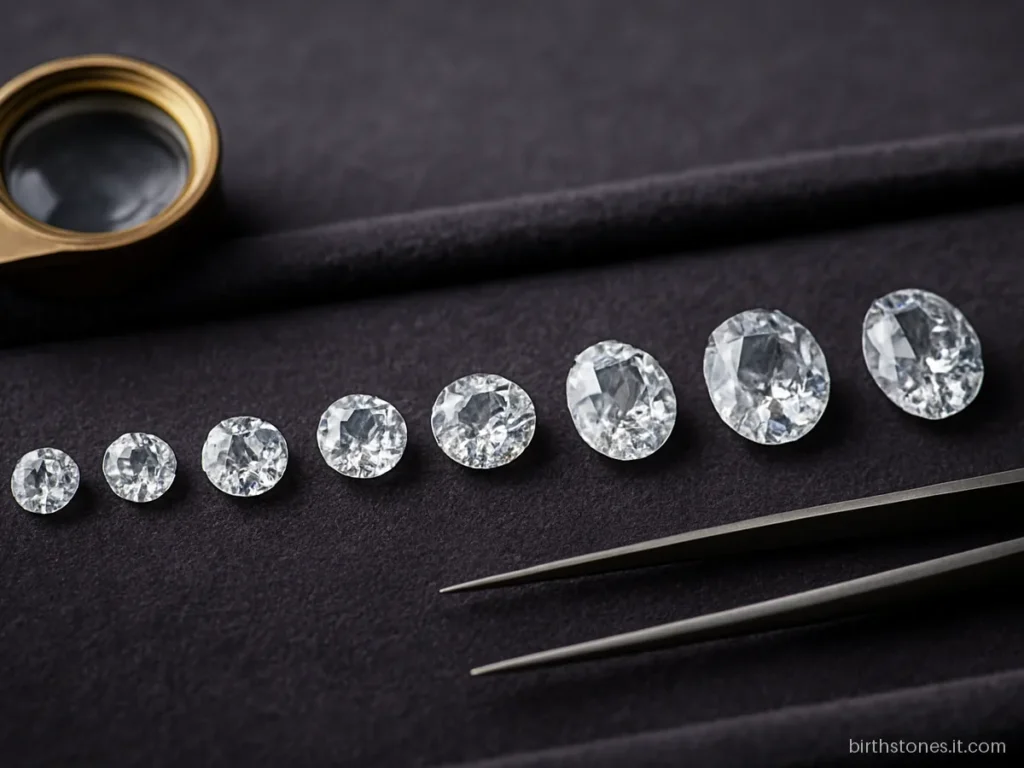
The white pukhraj stone price depends on how truly colourless the sapphire is, how clean and well cut it looks, its weight, whether it was heated and above all whether it is natural or lab made. Amounts vary from seller to seller and shift over time, so we list none.
What this page does give you: the factors that move a white sapphire quote, the common swaps that look similar, how to handle ratti and carat, and a short method for comparing offers fairly.
A quick method to compare white sapphire offers
- Pin down what the stone is
Get the bill to read "natural corundum, white sapphire", not just "white pukhraj".
- Set both stones on white paper
A faint yellow or grey tint shows up best against a white card in daylight.
- Look through the top
A good cut looks bright across the face. A see through centre means light is leaking out.
- Convert to carat
Ask for the scale weight in carat and the ratti value used, then compare carat to carat.
- Match the reports
Check that both reports say natural and state heating the same way before comparing amounts.
What decides the white pukhraj stone price
| Point | What raises value |
|---|---|
| Whiteness | No yellow, grey or blue tint |
| Clarity | Eye clean, few inclusions under a loupe |
| Cut | Even brightness; this matters more here because white sapphire has little fire |
| Size | Larger natural colourless rough is uncommon |
| Treatment | Unheated stones are quoted above heated |
| Origin | Sri Lankan stones are popular, if a lab confirms it |
| Natural vs lab made | Natural is valued far above created |
| Seller's margin | Shop costs, branding and services on top |
Lab made white sapphire and why it is so common
Created colourless sapphire is made on a large scale for watch faces, phone camera covers and lenses, and some of it reaches jewellery counters. It is clean, hard and cheap. Sold openly, it is a fair product. Sold as natural, it is a serious overcharge. A loupe cannot settle it, so get a report whenever the purchase is meant for Jyotish use. See the white sapphire stone page for the visual clues.
White topaz, zircon and other swaps
The words "white pukhraj" are sometimes used for white topaz, which is softer (8), lighter in feel and much lower in value. White zircon is a genuine natural gem with strong fire but softer, and it is also named as a heera substitute. Cubic zirconia and glass are imitations. Each has a fair value of its own, but none should be billed at a sapphire rate. Compare them on the zircon and topaz pages.
Ratti, carat and size
Labs and traders weigh in carat, with 1 carat equal to 200 milligrams. Many Indian buyers receive a weight in ratti from an astrologer. The ratti most jewellers use is close to 0.91 carat, but not everyone uses the same value, so a stone called 4 ratti can mean slightly different weights in two shops. Insist that the bill records weight in carats. White sapphire is a little denser than diamond, so a one carat sapphire looks a touch smaller across than a one carat diamond.
Heating and other treatments
Many colourless sapphires start with a faint tint and are heated to look whiter. Heated whiteness is permanent and few dealers object, yet an unheated stone with the same look is scarcer and usually quoted higher. Coatings that hide a tint are rarer but exist; they can wear off. A lab report should say what was found. Our gemstone certificate page explains report wording.
Warning signs
- The bill says only "white pukhraj" with no mineral name.
- A large, flawless natural stone offered for a small amount.
- Unusual rainbow fire, which suggests zircon, CZ or moissanite instead.
- No carat weight, or a report that does not match the stone.
- Astrological promises used to justify the amount.
White sapphire vs diamond on value
A natural white sapphire is usually far more affordable than a diamond of similar size and look, which is why many people choose it for jewellery and why astrologers offer it as a Venus substitute. It does not have diamond's fire, so judge it for what it is. For diamond value factors, read our diamond price guide.
Questions people ask
Why do white sapphire stone price quotes vary so much?
Natural vs lab made is the biggest gap, then whiteness, clarity, cut and heating. The ratti value a seller uses can also change the weight you think you are buying.
Is a natural white pukhraj expensive?
It is valued above white topaz and lab made sapphire, but well below most diamonds of similar size. Exact amounts vary by seller and quality.
Is there a way to spot a lab made white pukhraj?
Mined stones usually hide a few fine needles or specks visible at 10x, while factory grown ones tend to look flawless. A testing lab gives the firm answer.
Should I pay more for an unheated white sapphire?
Only if it matters to you or your astrologer. Heated stones are natural and stable. Make sure the report states the treatment either way.
Is white topaz a cheaper white pukhraj?
White topaz is a different mineral. It is fine as a stone, but it should never be sold or priced as white sapphire.