
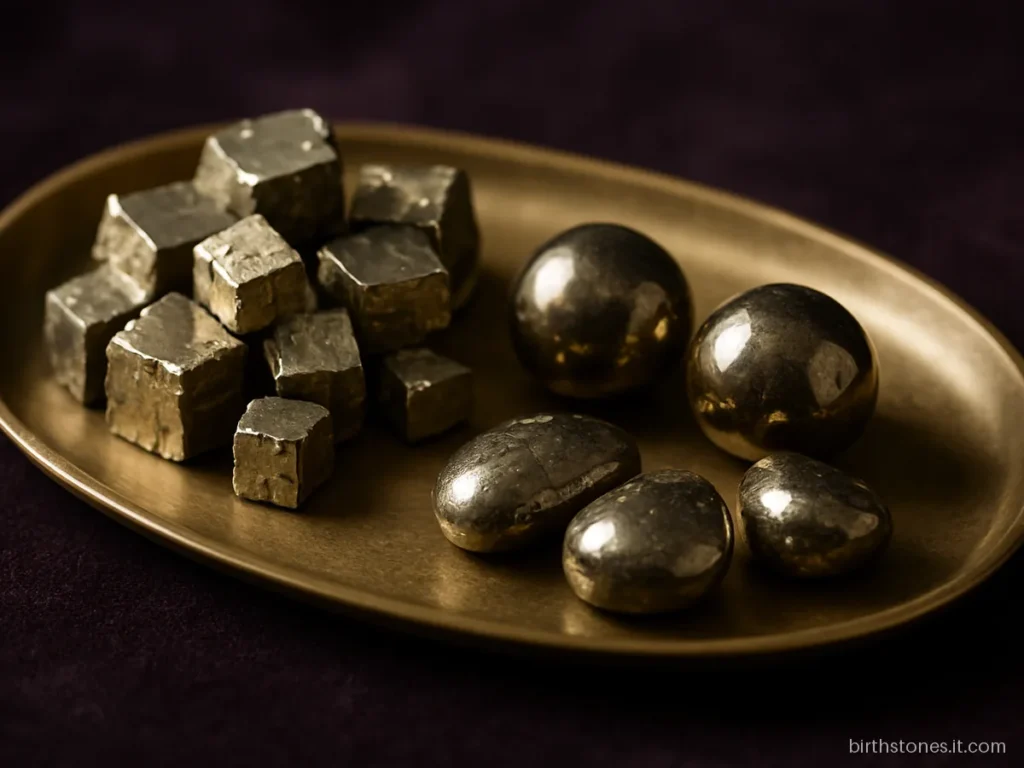
Pyrite stone price comes down to the form of the piece (raw cluster, single cube or polished item), how sharp and shiny the crystals are, the size and weight, any rust or damage, and the seller's margin. Because pyrite is a common mineral, the same looking piece can be quoted very differently by two sellers, so comparing is worth the effort.
This guide gives no figures, since rates move often and each seller sets their own. Instead it shows what you are paying for, how sellers quote, where fake or plated pieces creep in, and a simple way to compare offers across shops and online listings in India.
How to compare two pyrite quotes
- Write down the exact form and weight
Note whether it is a cluster, cube, sphere or bracelet, and its weight in grams. Two clusters of very different weight cannot be compared on looks alone.
- Compare crystal quality side by side
Look at photos in daylight. Sharp, mirror bright cubes with few chips are worth more than dull, rounded or broken crystals.
- Check for rust, cracks and glue
Ask for close up photos of the base and corners. Brown spots, white powder or glue lines lower value.
- Add delivery and extras
Heavy pieces cost more to ship. Stands, boxes and so called energising add to the bill without changing the stone.
- Ask about returns
A seller who accepts returns on fakes or damage is usually safer than a slightly cheaper one who does not.
What decides pyrite stone price
| Factor | Higher price | Lower price |
|---|---|---|
| Crystal form | Sharp, well formed cubes | Rough lumps, broken bits |
| Lustre | Mirror bright, untarnished | Dull, brown or spotty |
| Size and weight | Large, heavy display pieces | Small chips |
| Matrix | Cubes neatly set in contrasting rock | Messy or glued bases |
| Workmanship | Well polished spheres, even beads | Uneven polish, pitted beads |
| Seller | Showroom, branded packaging | Wholesale gem market |
Raw pyrite versus polished pyrite cost
Raw pieces are valued like mineral specimens. Collectors pay more for perfect cubes with straight edges, interlocking cubes and crystals sitting cleanly in matrix. Large natural cubes with almost no damage are the rarest and cost the most for their weight.
Polished pyrite is valued on workmanship as well as material. A sphere or pyramid needs solid, crack free rock and careful polishing, which adds labour. Tumbled stones and chips are the cheapest form, since they use offcuts. Beads sit in between; bead size, matching and the string all count, as explained on pyrite bracelet.
How sellers quote pyrite in India
For pyrite stone price in India, most market sellers quote small chips and tumbled stones by weight and better clusters per piece. Online listings often show a single photo for many pieces, so the stone you receive may differ. Ask for the photo of the exact piece and its weight on a scale.
Unlike navratna gems, pyrite is not sold by carat or ratti, and no laboratory report is usually issued for it. Your protection is careful photos, a clear description and a fair return policy.
Fakes and padding that inflate the bill
- Painted resin or plaster moulded into cube shapes and sprayed gold. Light weight and a pale base under chips give it away.
- Gold plated pyrite, coated to look warmer. It is real pyrite underneath, but the plating rubs off.
- Chalcopyrite sold as pyrite, a softer copper mineral with deeper colour.
- Glued clusters, where loose cubes are stuck onto rock to look natural.
- Energised or blessed labels with a premium. These do not change the mineral.
The pyrite stone guide has a step by step home check.
Condition: rust and decay lower value
Pyrite can tarnish and decay in damp air. A piece with brown rust spots, white or yellow powder, or a sulphur smell from the box is losing value and may keep crumbling. Ask whether the stock is kept dry, and look closely at photos of the base where decay usually begins. After buying, store it with silica gel so the money you spent is not lost to the monsoon.
Is a costly piece more powerful
Crystal users sometimes assume a bigger or dearer piece brings stronger results. Price reflects size, beauty and rarity, not any power. If your interest is the belief described on pyrite stone benefits, a small honest cube serves the same symbolic purpose as a large showpiece.
Comparing pyrite with similar crystals on price
Pyrite is usually one of the more affordable crystals, similar to hematite and common quartz, and far below precious gems. Fine collector clusters are the exception. For price factors of other popular crystals see tiger's eye price and quartz price.
Questions people ask
Why do pyrite stone prices vary so much between sellers?
Pyrite is common, so sellers set their own margins. Packaging, branding, energising labels and delivery costs also differ. Comparing weight, photos and return terms shows which offer is fair.
Is raw pyrite cheaper than polished pyrite?
Rough chips and small lumps are usually cheapest, but fine natural clusters with sharp cubes can cost more than polished items. Polished spheres and beads add labour to the material cost.
Does original pyrite come with a certificate?
Usually not, since it is a low value mineral. A clear description, honest photos and a return policy matter more; a laboratory test is possible but rarely worth it for small pieces.
How is pyrite sold, by weight or by piece?
Small chips and tumbled stones are often sold by weight, while clusters, cubes and spheres are priced per piece. Always ask the weight in grams so you can compare.
What is the cheapest way to buy real pyrite?
Buy a small natural cube or tumbled stone from a seller who shows the exact piece. Skip extras like stands and energising charges that do not change the mineral.