
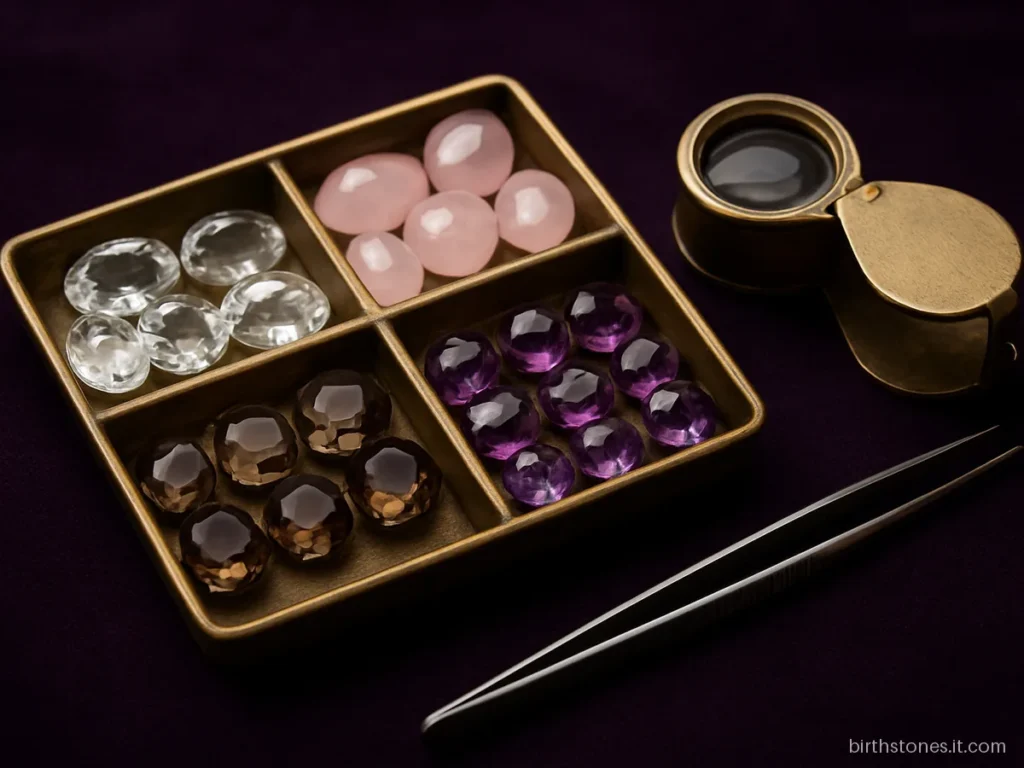
Quartz stone price depends mainly on the type of quartz, how clear and well coloured it is, how well it is cut, its size in carat or weight in grams, and whether it is natural, heated, dyed or made in a lab. Quartz is a common mineral, so most pieces are affordable, but a large, clean, well cut stone can cost many times more than a cloudy one of the same weight.
This guide covers quartz gems and crystals only, not kitchen slabs. Rates move over time and differ between shops, so the useful skill is knowing what you are paying for and how to compare offers.
How to compare two quartz quotes
- Confirm both are the same type
Clear quartz, rose quartz and citrine are priced very differently. Make sure both quotes name the same variety.
- Match the unit
One seller may quote per carat, another per gram or per piece. Convert to the same unit before comparing. One carat is 0.2 gram.
- Compare clarity and colour side by side
View both stones in daylight. A cleaner, brighter stone with even colour deserves a higher figure.
- Ask about treatment
Get a written answer on heating, dyeing, coating or lab growth. Treated or synthetic quartz should cost less.
- Check the return policy
A seller who allows a return after an independent lab test is usually more confident about the stone.
Why quartz stone price varies so much
Two pieces of quartz can weigh the same and still sit far apart in price. The mineral is common, but clean, evenly coloured material that can be cut into a sparkling gem is much rarer than cloudy rough. Labour also counts: a precisely faceted gem or a fine carving takes hours of skilled work, while tumbled stones are polished in bulk.
The seller's costs and margin are part of every quote too. A shop with testing, packaging and a return policy will price differently from a roadside stall.
Type of quartz
| Type | General price position | Why |
|---|---|---|
| Milky and clear quartz rough | Lowest | Very common |
| Rose quartz, aventurine, tiger's eye | Low to moderate | Common, mostly beads and cabochons |
| Smoky quartz, amethyst | Moderate | Colour quality matters a lot |
| Natural citrine | Higher than heated | Most yellow quartz on sale is heated amethyst |
| Rutilated or rare inclusion quartz | Can be high | Each piece is unique |
See amethyst price, citrine price and tiger's eye price for those varieties.
Clarity and colour
For faceted clear quartz, clarity is everything: an eye clean stone with no visible cracks or clouds is worth far more than one with veils. For rose quartz, a deeper, even pink with good translucency costs more than pale, chalky material. For amethyst, a rich purple without brown or grey tones is the top grade. For smoky quartz, a warm, see through brown is usually preferred over a dull, near opaque one.
Cut, shape and finish
A well proportioned faceted stone returns light evenly across its face; a shallow or lopsided one looks glassy and dead in the centre. Fine carving, spheres with no flat spots, and matched bead strands with uniform size and colour all add cost. Rough points with natural, undamaged tips are priced above broken or reshaped points, which are sometimes polished on a machine to look natural.
Size in carat, grams or pieces
Cut quartz gems are usually sold by the carat, where 1 carat is 200 milligrams. Some Indian sellers quote in ratti; a ratti is a bit lighter than a carat in most Indian workshops, but its exact size changes between sellers, so check which ratti is meant. Crystals, clusters and tumbles usually go by weight in grams or kilos, or per piece. Larger clean pieces become rare, so the rate per carat usually rises with size.
Natural, treated or lab made
Quartz can be heated, irradiated, dyed, coated or grown in a lab. Lab grown quartz is chemically real quartz and is used widely in industry and in some jewellery; it should cost less than natural. Heated amethyst turned yellow is often sold as citrine. Dyed quartz shows colour pooling in cracks. Coated crystals with a rainbow sheen, sometimes called aura quartz, carry a surface film that can scratch off. None of these is wrong to buy, as long as the seller tells you and the price reflects it.
Origin claims and certificates
Sellers may add value for a famous source, such as Himalayan or Brazilian quartz. These claims are hard to prove and should not add much to the price unless documented. For an expensive faceted piece, a written report from a neutral testing lab confirms the mineral and states any treatment. Read our gemstone certificate guide to understand what a report does and does not say.
Reading a quartz stone price quote
A clear quote names the variety, weight with its unit, shape and size in millimetres, any treatment, natural or lab origin, plus the return terms. If a quote only says high quality crystal with no details, ask more questions. Compare at least three sellers, because prices change and vary widely. More on the mineral itself is in the quartz stone guide.
Questions people ask
Is quartz stone price per carat or per gram?
Faceted quartz gems are usually priced per carat. Raw crystals, clusters and tumbled stones are usually priced per gram, per kilo or per piece. Always check the unit before comparing.
Why is some citrine priced much lower than other citrine?
Most low priced citrine is amethyst baked in a furnace until it goes yellow or orange. Natural citrine is paler and rarer, so it usually costs more.
Does a bigger quartz always cost more?
Usually, but a big cloudy piece can cost less than a small clear one. Clarity, colour and cut matter as much as size.
Is lab made quartz cheaper?
Yes, lab grown quartz should cost less than natural quartz of the same look. It is real quartz in chemistry, so get the shop to say plainly which one you are buying.
How can I avoid paying too much for quartz?
Compare several sellers, ask for weight, treatment and return terms in writing, and for costly stones ask for a lab report. Do not pay extra for vague origin or energy claims.
Does this guide cover quartz kitchen slabs?
No. Kitchen slabs are engineered stone made from crushed quartz and resin. This guide covers quartz gems and crystals only.