
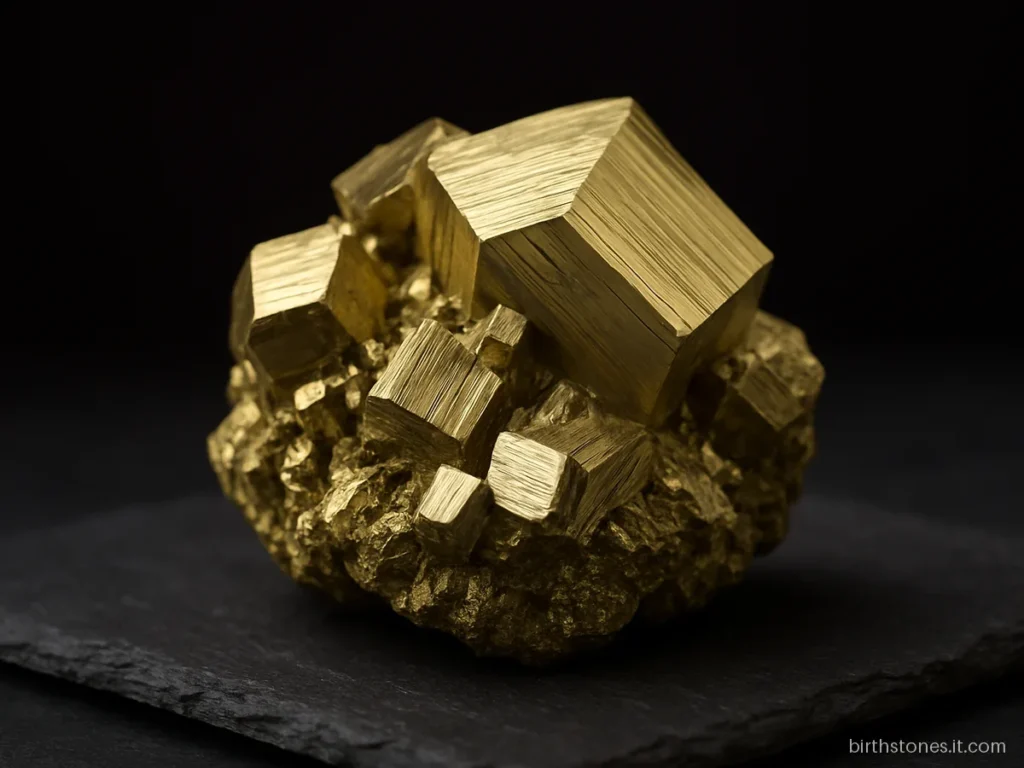
Pyrite stone is a natural mineral made of iron and sulphur (iron sulphide) with a bright brassy yellow shine, which is why miners long ago nicknamed it fool's gold. It forms sharp cubes, flat discs and glittering clusters, and in India it is now one of the most asked about crystals for the desk, the cash box and the shop counter.
This page covers what pyrite really is, how raw pieces differ from polished ones, why so many people link it with money (a belief, not a fact), where they keep it, how to tell an original piece from a painted copy, and how to stop it rusting in the monsoon.
How to check whether a pyrite stone is original
- Feel the weight in your palm
Real pyrite is heavy for its size, close to iron. A gold painted resin or plastic piece feels light and warm.
- Look at the shine and the edges
Natural cubes have flat, mirror like sides, often with fine parallel lines (striations). The colour is pale brass, not the deep yellow of jewellery gold.
- Check corners and cracks for paint
Paint and plating wear off at sharp corners first and show a grey or white base underneath. Real pyrite is the same colour all the way through.
- Do a streak test on unglazed tile
Rub a small hidden corner on the back of a plain ceramic tile. Pyrite leaves a greenish black line. Gold would leave yellow and brass usually leaves a yellowish mark.
- Smell after a firm rub
A raw piece rubbed hard on rough tile often gives a faint sulphur, matchstick smell. Plastic and painted stone do not.
What is pyrite stone
Pyrite is a sulphide mineral: each tiny unit holds one iron atom and two sulphur atoms. It is the most common sulphide on earth and turns up in coal seams, in quartz veins, in shale and around old volcanic rock. It is not a precious gem, and it does not contain gold, even though small amounts of gold are sometimes found near it in the same rock.
The nickname fool's gold comes from prospectors who mistook its glitter for gold. The two are easy to separate once you know how: gold is soft enough to dent with a pin and bends; pyrite is hard and brittle and shatters when hit. In the gem trade it is often called pyrite gemstone when it is cut into beads or cabochons, but mineral collectors treat it as a specimen stone first.
Raw pyrite stone: cubes, clusters and discs
Most people in India buy raw pyrite stone, meaning pieces left as nature grew them. Common shapes are:
- Single cubes: sharp edged cubes, sometimes perfectly square, still sitting in grey rock (matrix) or loose.
- Clusters: many small crystals grown together, sparkling from every angle. These are the pieces most often placed on desks.
- Pyrite suns or discs: flat round radiating forms that grow between layers of shale.
- Chips and small nuggets: uneven bits used in bowls or small pouches.
Polished pyrite is cut into spheres, pyramids, tumbled stones and round beads. Polishing gives a darker, mirror like grey gold look. See pyrite bracelet for bead quality and sizing.
Pyrite names and look alike minerals
| Mineral | Colour and shine | Hardness | Quick tell |
|---|---|---|---|
| Pyrite | Pale brass, strong metallic | 6 to 6.5 | Cubes, greenish black streak |
| Gold | Rich warm yellow | 2.5 to 3 | Soft, bends, yellow streak |
| Chalcopyrite | Deeper brass, often with blue or purple tarnish | 3.5 to 4 | Softer, scratches with a steel nail |
| Marcasite | Paler, almost tin white when fresh | 6 to 6.5 | Spear or cockscomb shapes, crumbles faster |
A Hindi language overview of the same stone is on pyrite stone in Hindi.
Where pyrite comes from
Pyrite is mined across the world. Large mirror bright cubes come from northern Spain, sparkling clusters from Peru, and many tumbled pieces and beads from China. India also has pyrite in several mining belts, though most decorative pieces sold here are imported. The origin rarely changes how a piece behaves; crystal sharpness, shine and freedom from rust matter far more.
Why pyrite is linked with money (a belief)
The money link is a modern belief, not a proven effect. The reasoning offered by crystal sellers is simple: the stone looks like gold, so it is treated as a symbol of wealth and steady earnings. Feng shui and vastu style advice has added to its popularity, and shop owners often keep a cluster near the cash counter as a reminder of their goals.
Detailed beliefs and cautions are on pyrite stone benefits.
How to use pyrite stone at home and work
Since people ask how to use pyrite stone, here are the common practices, described as habits rather than rules:
- Desk or study table: a small cluster kept beside a laptop or account books.
- Cash box or locker: a cube placed inside a drawer, wrapped in cloth so it does not scratch coins or paper.
- Shop counter: a larger cluster in a shallow dish, away from the sink and wet cleaning.
- Bracelet or pocket stone: polished beads or tumbled stones carried daily.
Vastu and feng shui writers suggest different directions, so lists vary. Keep it somewhere dry and out of a damp bathroom or kitchen, because moisture damages it faster than anything else.
Keeping pyrite dry: care and storage
Pyrite reacts slowly with air and moisture. In humid weather the surface can dull, turn brown with rust spots or grow a white or yellow powder. In bad cases the piece crumbles, a problem collectors call pyrite decay. Damp coastal cities and the rainy season are hardest on it.
- Dust with a soft dry brush or dry cloth. Do not wash it under the tap or leave it in a bowl of water.
- If it gets wet, dry it at once with a cloth and leave it in a warm, airy spot.
- Store it with a silica gel sachet in a closed box during the monsoon.
- Keep it away from salt, which pulls in moisture, and from other soft stones it can scratch.
A thin rust stain can sometimes be lifted with a dry toothbrush; deep decay cannot be reversed.
Pyrite stone safety
Polished, dry pyrite carried in a pocket or worn as beads is generally considered fine for normal handling. Grinding or sanding it makes fine dust, so leave cutting to workshops with proper dust control.
Pyrite compared with other crystals sold for prosperity
Sellers often place pyrite beside citrine and green aventurine under the same money label. Physically they are very different. Citrine and aventurine are quartz, harder (6.5 to 7) and happy with a quick rinse. Pyrite is a metallic sulphide that dislikes water. Hematite, another heavy metallic grey stone, is iron oxide and also rusts if left wet. The wider family is covered on crystal meanings.
Questions people ask
What is pyrite stone made of?
Pyrite is iron sulphide, iron combined with sulphur. It has no gold in it, which is why it earned the name fool's gold.
What is the easiest test for original pyrite stone?
Original pyrite is heavy, cold to touch, has flat shiny faces with fine lines and leaves a greenish black streak on unglazed tile. Painted fakes are light, show a different colour where they chip and leave no dark streak.
Can pyrite get wet?
A few splashes dried at once do no harm, but soaking or long humidity makes it rust and crumble. Clean it dry and store it with a silica gel sachet in the rainy months.
Is raw pyrite stone better than polished pyrite?
Neither is better, they suit different uses. Raw clusters show the natural cubic crystals and are kept on desks, while polished beads and spheres are smoother to carry and wear.
Is pyrite a gemstone or a crystal?
It is a mineral that is mainly sold as a crystal or specimen. When cut into beads or cabochons, sellers call it a pyrite gemstone, but precious gem lists and the navratna set leave it out.
Is pyrite safe to keep at home?
Yes, as a dry decorative stone. Do not use it in water for drinking, wash your hands after handling raw pieces and keep powdery specimens away from young children.