
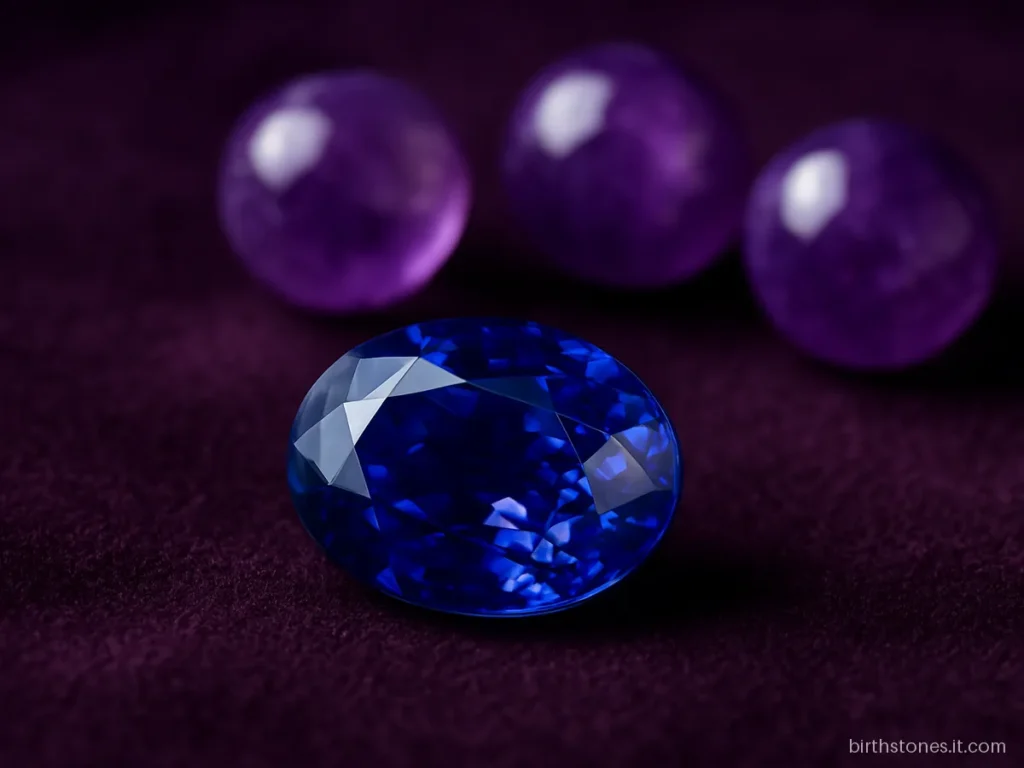
Neelam, or blue sapphire, is the kumbh rashi stone in Jyotish, because Kumbh (Aquarius), also written Kumbha, is governed by Saturn and the blue sapphire is Saturn's gem. Amethyst, sold as jamunia, and iolite, sold as neeli, are the substitutes you will hear most.
Search boxes fill up with versions of one question, such as kumbh rashi ke liye konsa ratna pehne chahiye, meaning which gem should Kumbh people wear. Tradition answers neelam, yet it also says this gem is never worn casually: a full chart reading and usually a trial period come first. Below are the names, the shades of blue, a neat overlap with the Western Aquarius stone, and practical notes for men and women. Every rashi is listed on the rashi stone hub.
Kumbh rashi stone name in Hindi and English
The kumbh rashi stone name changes with the speaker, which is why people search it so often. These all mean the same few stones.
| You may hear | It means | Role for Kumbh |
|---|---|---|
| Neelam, nilam | Blue sapphire | Main ratna |
| Shanipriya, in some old texts | Blue sapphire | Main ratna |
| Jamunia | Amethyst | Upratna |
| Neeli, kaka neeli | Iolite | Upratna |
| Lajward | Lapis lazuli | Named by a few as an extra option |
Kumbh and Kumbha are spellings of one rashi, the water bearer.
Why Saturn decides the kumbh rashi ratna
Saturn rules Kumbh and Makar alike. In Kumbh, astrologers link it with service, groups, ideas and patience. They believe a well placed Saturn can be supported by neelam, and a badly placed one may be stirred up by it, which is why the stone is treated with respect. This is tradition and faith. No gem changes court cases, jobs or health on its own.
The Makar rashi stone page explains the trial custom in detail, so we keep it short here: expect your astrologer to suggest a few days of trial before any ring is made.
Kumbh rashi stone colour: the blues of neelam
The kumbh rashi stone colour, or kumbha rashi stone colour, is blue. Within blue, buyers in India often describe neelam with these words:
- Cornflower or soft blue: a bright, gentle mid blue that stays lively in daylight.
- Royal blue: a deep, rich blue, usually the most sought.
- Inky or dark blue: so dark it looks black under a tube light; graded lower.
- Pale or greyish blue: weak colour, also graded lower.
For the substitutes, amethyst is lilac to purple, and iolite is violet blue that turns almost grey when you rotate it. More on blue sapphire grading sits on the neelam stone page.
A neat overlap: Aquarius uses amethyst too
Western Aquarius, the sign for 20 January through 18 February, says that its usual birthstone is amethyst. In Jyotish, amethyst is jamunia, an upratna for Saturn. So the Western and Vedic answers almost meet here, though for different reasons: one comes from a colour tradition tied to dates, the other from Saturn's gem list.
Do not mix them up, though. A Western Aquarius born in early February may have a Moon in a completely different rashi. Read the Aquarius birthstone and amethyst stone pages for that side.
Kumbh rashi stone for male natives and for women
| Question | Kumbh men | Kumbh women |
|---|---|---|
| Which gem does tradition give? | Neelam | Neelam |
| Common format | Ring on the middle finger | Ring, sometimes a pendant if the astrologer allows |
| Usual metal | Silver or panchdhatu | Silver, panchdhatu or white gold |
| Who decides weight? | Astrologer, from the chart | Astrologer, from the chart |
So the kumbh rashi stone for female and for male natives is the same gem. Only small practical choices change, and those depend on the astrologer.
Telling real neelam from look alikes
Blue is easy to fake. Common imitations and treatments include blue glass, synthetic sapphire made in a lab, doublets with a thin sapphire top on a glass base, and sapphire that has been diffusion treated or glass filled. Real neelam is heavy for its size, shows fine silk or colour bands under a lens, and does not show round gas bubbles. Iolite can pass for sapphire at a glance, but it changes colour strongly as you turn it.
Treatments are not always a problem if declared. Ask for them in writing, and get a report from an outside lab before paying for anything costly.
Kumbh rashi birth month: Sun versus Moon
Kumbh rashi birth month is a question with no single answer. The Sun stays in Vedic Kumbh from about mid February to mid March, but most Indian astrologers read your rashi from the Moon, a body that passes through Kumbh for two to three days every month. That means Kumbh natives turn up in every month.
Kumbh rashi lucky stone, read with care
Shops love to call neelam the kumbh rashi lucky stone. Fortune, however, rests on belief here, and a gem cannot hand it over. Confirm Kumbh in your kundli, have an astrologer read the full chart including Saturn's current period, accept the trial if advised, and remember that choosing not to wear a stone is always allowed.
Care is easy: neelam takes warm water, a drop of soap and a soft brush. Amethyst may pale if left for weeks on a sunny windowsill; a closed box suits it.
Questions people ask
What is the kumbh rashi ratna?
Saturn's gem, neelam. Custom advises a chart reading and usually a short trial first.
What is the kumbha rashi birthstone in Jyotish?
The same neelam. Kumbha is simply another spelling of Kumbh.
Is amethyst good for Kumbh rashi?
Amethyst, called jamunia, is a commonly named upratna for Saturn. It is also the Western Aquarius birthstone. Ask your astrologer whether it suits your chart.
Where on the hand does a Kumbh native traditionally place neelam?
The middle finger is the customary choice, in silver or panchdhatu, starting on a Saturday, subject to your astrologer's view.
What is a good stone for Kumbh rashi if neelam is not advised?
Astrologers often name jamunia or neeli. Some advise no stone at all, which is a perfectly valid outcome.
Is the kumbh rashi birthstone fixed by birth month?
No. Your rashi depends on the Moon's position at birth, so check your kundli rather than your calendar month.