
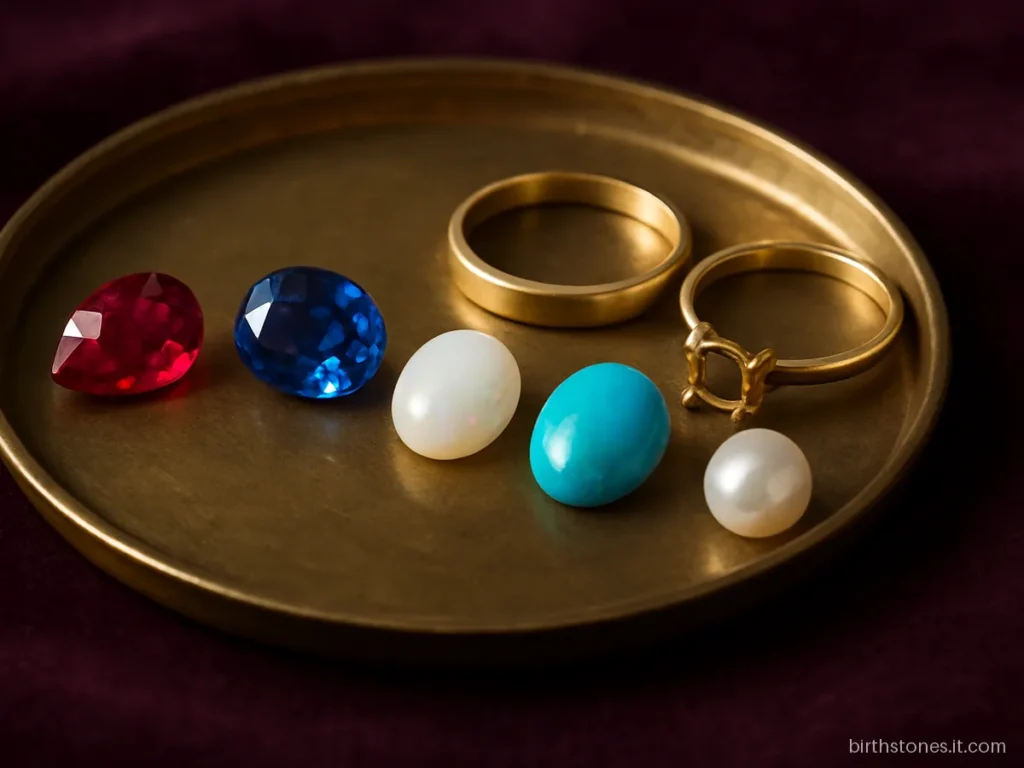
Gemstone jewellery lasts when the stone suits the job: hard gems such as sapphire, ruby and diamond shrug off daily knocks, while soft or porous stones such as pearl, opal, turquoise and coral need protective settings and gentler wear. Hardness, toughness and how the stone is held in metal decide whether a piece still looks good after years.
This guide is about function, not fashion. You will find a hardness chart for everyday wear, the settings a bench jeweller uses to protect delicate stones, what to check before buying, how gemstone beads are strung, and a care routine. Design ideas belong elsewhere; here we focus on keeping the gem safe. Spelt gemstone jewelry in American English, it is the same subject.
How to choose a gemstone piece for daily wear
- Decide where it will be worn
Rings and bracelets take the most knocks; earrings and pendants the fewest. Match the stone's hardness to that risk.
- Check the hardness and toughness
A stone of 7 or more on the Mohs scale resists dust scratches. Toughness matters too: emerald is hard but brittle.
- Pick a mount that shields the gem
For soft or brittle stones, a bezel or a low set mount guards the edges better than tall thin claws.
- Inspect the mount
Prongs should be even and grip the stone without gaps. Shake it gently near your ear; a loose stone may rattle.
- Get the gem identity and treatment on paper
Get the gem name, natural or lab made, and any treatment in writing on the bill.
Hardness chart for gemstone jewellery
| Stone | Mohs hardness | Daily ring? |
|---|---|---|
| Diamond (heera) | 10 | Yes |
| Ruby (manik), sapphire | 9 | Yes |
| Spinel, topaz | 8 | Yes |
| Emerald (panna), aquamarine | 7.5 to 8 | With care; emerald is brittle |
| Garnet | 6.5 to 7.5 | Yes, with care |
| Citrine and amethyst | 6.5 to 7 | Yes, with care |
| Peridot, tanzanite | 6 to 7 | Occasional wear |
| Moonstone | 6 to 6.5 | Occasional wear |
| Opal, white or fire | 5.5 to 6.5 | Protective setting only |
| Turquoise (firoza) | 5 to 6 | Protective setting only |
| Coral (moonga) | 3 to 4 | Better in pendants |
| Moti (pearl) | 2.5 up to 4.5 | Better in earrings, pendants |
Household dust contains quartz, which sits at about 7. Anything softer gets dulled bit by bit when it rides on the hands daily.
Settings that protect soft and brittle stones
- Bezel: a continuous metal rim around the stone. The best guard for opal, turquoise, emerald and cabochons.
- Half bezel: metal on two sides, leaves more of the stone visible.
- Low claw or prong: fine for hard stones; keep the stone close to the finger.
- Channel and flush: small stones sunk into the metal; very secure.
- Open back: lets light in; some astrological traditions prefer the stone to touch skin, which an open back allows.
Tall settings catch on cloth and hair and expose the girdle to knocks, so they suit special occasion pieces better than workday wear.
Metals used with gems
Gold is the most common metal for coloured stones in India; silver suits pearl, moonstone and turquoise; platinum and white gold suit diamond. In astrological wear some stones are set in panchdhatu or copper by custom, and the astrologer usually names the metal and finger. Silver tarnishes, so clean it with a soft silver cloth, kept well away from porous gems. Avoid cheap plated settings for daily pieces; once the plating wears, the base metal can mark skin.
Original gemstone jewellery: checks before buying
Original gemstone jewellery should come with a bill naming each stone, saying natural or lab made, and listing treatments such as heating, oiling, dyeing or stabilising. Metal purity should be stated separately. For a costly central gem, ask for a lab report; our gemstone certificate guide shows how to read one. Be wary of words like semi precious stone, colour stone or crystal on their own, which can hide glass or synthetic material.
Gemstone beads and bead jewellery
Gemstone beads are drilled spheres, rondelles or chips strung into necklaces and bracelets. Good strands use stones of even colour and size with smooth drill holes. Fine necklaces are knotted on silk or nylon thread so beads do not rub and so that a break loses only one bead. Elastic cord is common for bracelets but stretches and should be replaced from time to time. Many low cost beads are dyed or reconstituted; ask before buying. See stone bracelets for bracelet specific advice.
Gem stone jewellery for daily wear vs occasions
For a gem stone jewellery piece you will wear to work, cook and travel in, choose hard stones in low, closed settings. Keep opal, pearl, coral, emerald and tall settings for occasions, or put them in earrings and pendants where they meet fewer knocks. Take rings off before gym work, gardening and handling bleach. Separate pieces when storing, so a diamond does not scratch a softer neighbour.
Cleaning by stone type
| Group | Safe cleaning | Avoid |
|---|---|---|
| Hard stones: ruby, sapphire, topaz, spinel | Warm soapy water, soft brush | Hard knocks |
| Emerald | Lukewarm water, soft cloth | Ultrasonic, steam, solvents |
| Opal, turquoise, coral, pearl, amber | Damp soft cloth only | Soaking, chemicals, perfume, heat |
| Bead strands | Wipe with a damp cloth, dry flat | Soaking the thread |
When a piece mixes stones, clean it the way the softest stone requires.
Regular checks and repairs
Every six months or so, have a bench jeweller look over prongs, clasps and threads. Worn claws are the main reason stones fall out. If a stone feels loose, stop wearing it until fixed. Keep the original bill and any report so a repaired piece can be matched to its paperwork. For birth month pieces, see birthstone jewellery.
Questions people ask
Which gemstones are best for everyday jewellery?
Diamond, ruby, sapphire, spinel and topaz are hard enough for daily rings. Garnet, amethyst and citrine also work with reasonable care.
Can I wear opal or turquoise every day?
You can, but they are soft and porous. Choose a bezel setting, avoid creams and water, and expect some wear over time.
What is the safest setting for a soft stone?
A bezel, where a metal rim surrounds the stone, protects edges best. Low set mounts also reduce knocks.
How do I know my gemstone jewellery is original?
The bill should name each stone, say natural or lab made and list treatments. On an expensive piece, outside lab testing is the firmest evidence.
How should gemstone beads be stored?
Lay strands flat in a soft pouch, apart from hard jewellery. Hanging heavy strands for long periods stretches the thread.