
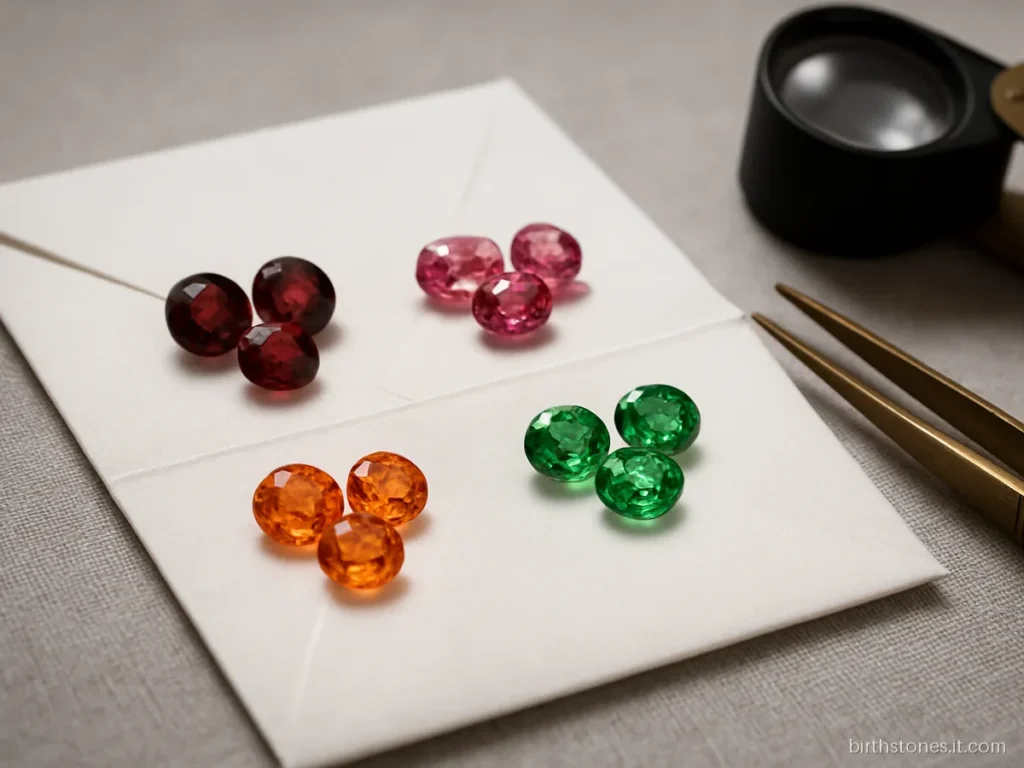
Garnet stone price hangs above all on the kind of garnet in your hand, because a common red almandine and a vivid green tsavorite belong to different worlds; after that, colour, clarity, cut and size decide where a stone sits within its type. Red garnet is one of the friendlier gems for a buyer, as India mines plenty and most stones are untreated.
You will not see amounts here. Rates move, and a jeweller, a wholesale dealer and an online seller each add different costs. This page teaches you to read a garnet quote line by line and spot the offers that are too good. For background on the mineral, visit the garnet stone guide.
Steps to check a garnet quote
- Get the garnet type in writing
Almandine, pyrope, rhodolite, spessartine, hessonite, tsavorite or demantoid. Each type has its own value band.
- Confirm weight and the unit used
A carat is always 200 milligrams. If the shop quotes ratti, ask which ratti, since the value used in India varies.
- Study it by a window, then by yellow lamplight
Deep red garnets can turn blackish in poor light. A stone that keeps a clear red in both is the better buy.
- Check from the side for a join
Doublets show a seam near the girdle. Ask the seller to confirm it is a single natural stone.
- Compare like with like
Only line up stones of the same type, similar size and similar colour before judging which quote is fair.
What decides the garnet stone price
| Point checked | Adds value | Takes value away |
|---|---|---|
| Type | Tsavorite, demantoid, colour change | Common almandine |
| Colour | Clear, saturated red or vivid green | Brownish, blackish or washed out |
| Clarity | Eye clean | Visible cracks or cloudy patches |
| Cut | Even sparkle, good proportions | Dark centre, lopsided shape |
| Size | Large fine stones of rare types | Tiny or chipped pieces |
| Identity | Single natural stone, named type | Glass, doublet or unnamed red stone |
For red types, colour clarity and cut matter more than sheer size, since a big dark garnet often looks almost black.
Why type changes everything
Garnet is a family, so the label on a quote matters more than for most gems. Almandine and pyrope are plentiful and form the base of the red garnet trade. Rhodolite, with its raspberry tone, usually sits a step higher. Bright orange spessartine and fine hessonite (gomed) form another group, and gomed has its own price guide because of its navratna demand. Vivid green tsavorite and demantoid are rare and can rival far better known gems.
Original garnet stone price and natural vs lab made
Search for original garnet stone price and you will meet many offers. Natural garnet is not usually grown in labs for jewellery, so the risks are different. The cheap traps are red glass, a garnet and glass doublet, or a different red stone sold under the garnet name. Lab materials such as YAG and GGG share a garnet type crystal structure but are synthetic imitations, mostly once used to look like diamond. A truthful bill will say natural garnet and give the type.
Treatments: mostly none
Unlike ruby and sapphire, which are often heated, garnet is rarely treated. That helps buyers: you mostly pay for what nature made. Occasional fracture filling or coating does exist on low grade material, and beads may be dyed for a brighter red. If a stone shows a strange surface shine or colour concentrated in cracks, ask directly. For costly pieces, an outside gem lab with no share in the deal can clear any doubt; see what a gemstone certificate shows.
Cut, shape and calibration
Many Indian garnets are cut in Jaipur in standard calibrated sizes for jewellery, and these are usually the best value. Unusual shapes, deep custom cuts or matched pairs for earrings take more rough and more labour, so they cost more. A shallow cut can brighten a dark red stone. Look at the face: if the centre shows a dull window or a black blot, the cutting has wasted the colour.
Beads, raw pieces and rings priced differently
Garnet beads, raw crystals and tumbles change hands by the strand or by weight and are usually inexpensive, since they use lower grade rough. A faceted single stone is judged gem by gem. A finished ring adds gold or silver weight, making charges and the seller's margin. When comparing, request one figure for the garnet and another for the mount. Garnet bracelets are covered under stone bracelets.
Why prices vary from seller to seller
Garnet rates shift with supply from mines in India and Africa, and each seller adds rent, testing, guarantee and margin. A shop with a return policy and clear labels may quote higher than a market stall, and that can still be the better deal. Gather three or more written offers for the same type and similar quality before you settle on one, and keep each written quote.
Warning signs in a garnet offer
- Red stone or ruby garnet with no type named.
- A very large, bright, flawless red stone at a low rate.
- Promises of astrological results attached to the sale.
- Refusal to state natural or lab made in writing.
- A hurry up, buy today push.
For other red stones to compare, see red gemstones.
Questions people ask
Why is green garnet valued more than red?
Tsavorite and demantoid are much rarer than red almandine and pyrope. Rarity and bright colour lift them into a higher value band.
Are garnets heated like rubies?
Usually not. Most garnets are sold untreated, though low grade beads can be dyed and some stones are coated or filled.
What proves a garnet is original?
Ask for the type on the bill, look from the side for a doublet seam and check for round bubbles that suggest glass. When the stone is expensive, a gemmologist unconnected with the shop should test it.
Is garnet sold by carat or ratti?
Both. One carat equals 200 milligrams, while ratti varies by seller, so always confirm the unit before comparing quotes.
Is gomed priced like red garnet?
No. Gomed is hessonite garnet with its own demand as a navratna, so it is quoted on its own scale.