
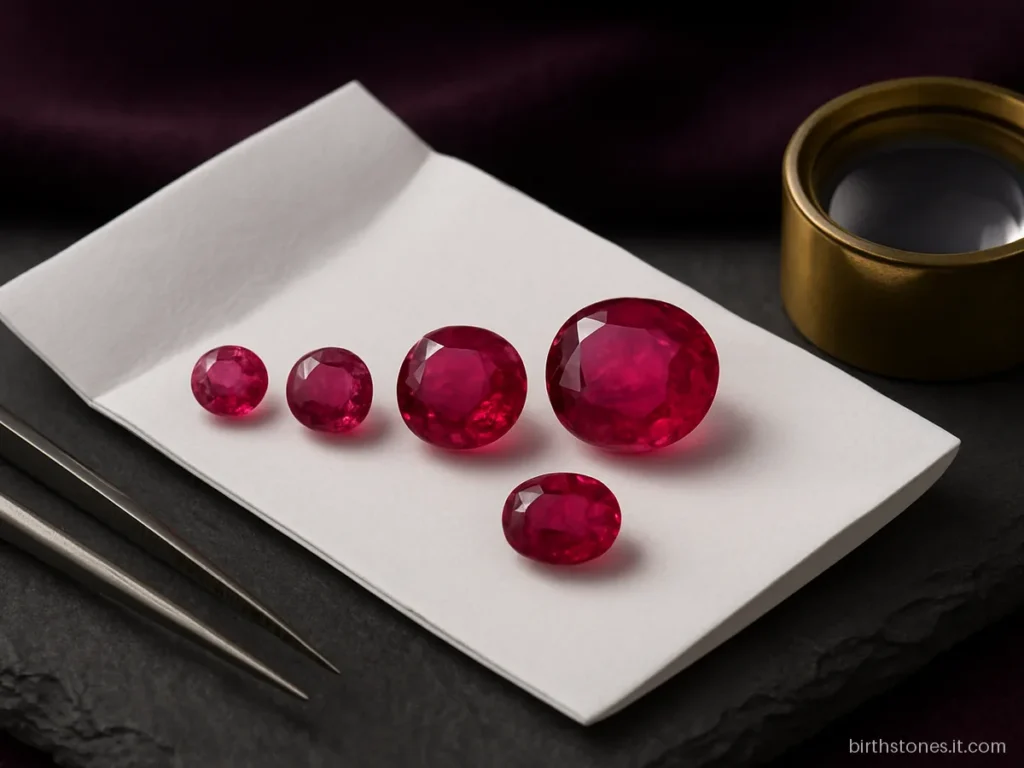
A ruby stone price can swing from very low to extremely high, because a glass filled manik, a heated ruby and an unheated fine ruby may all be sold as "natural ruby". Colour, clarity, weight, treatment and origin decide where a stone sits, and amounts also change between sellers and over time.
So we give no figures here. You will learn which factors push a manik quote up or down, why glass filling matters so much, how ratti relates to carat and how to put two offers side by side.
The factors behind a ruby stone price
| What is checked | Pushes it up | Pulls it down |
|---|---|---|
| Colour | Vivid, pure to slightly bluish red | Brownish, pinkish or very dark |
| Clarity | Eye clean or with fine silk | Open fractures, cloudy zones |
| Size | Larger clean stones (rare) | Small or heavily included |
| Treatment | No heat | Glass filled or composite |
| Source country | Backed by a lab opinion | Only the seller's word |
| Cut | Bright across the face | Dark patches, deep belly |
On top of the stone itself, the seller adds a margin for rent, staff, brand and any astrology service attached.
Heated, unheated and glass filled manik
Heating is routine for ruby. It clears purple or blue zones and improves the red, and it is stable. Unheated rubies with fine colour are rare, so they sit at the top of the market. Glass filled ruby (also called lead glass filled or composite ruby) is low grade, heavily cracked corundum soaked in glass so it looks clear. It contains real ruby but is valued at a tiny fraction of a heated stone and is fragile. This one treatment explains most of the very cheap "original ruby stone" offers you see online.
Carat, ratti and the 1 carat question
People often ask what a 1 carat ruby is worth. There is no single answer, since one carat can be a glass filled stone or a fine unheated one. Labs weigh in carat (200 milligrams). Indian sellers often quote manik in ratti, and jewellers commonly reckon a ratti at about 0.91 carat, though other values exist. When someone offers "7 ratti manik", get the scale reading in carats and the ratti value behind it, then compare using carat only.
Origin labels: Burma, Mozambique, Thai
Burma (Myanmar) and Mozambique rubies carry strong demand. Thai and African stones from other sources are usually darker or more brownish and are quoted lower. A country name spoken across the counter is not evidence. A trusted lab can give an origin opinion; it costs extra and is worth it only for costly stones.
Natural vs lab made ruby
Created ruby shares natural ruby's chemistry and its hardness of 9. Factories have grown it for generations, and it costs little. Some are sold honestly as "created ruby"; others are passed off as natural. Home checks cannot reliably separate them. See original ruby for what you can and cannot check yourself.
What a ruby lab report should state
Look for the words natural corundum and variety ruby, the carat weight, measurements and a treatment line. Typical lines read like "no indication of heating", "heated", or "clarity enhanced with lead glass". The last one means a composite stone. If a seller's own paper has no treatment line, ask for an independent report. Our gemstone certificate page shows how to verify one.
Red flags in a manik quote
- A large, clear, bright red ruby offered at a small amount.
- Words like "natural treated" or "pure manik" with no report.
- A soft, oily shine on parts of the surface, or blue flashes inside.
- A ratti figure with no carat weight.
- A promise of astrological results bundled into the amount.
For names and types first, start with the ruby stone guide.
Questions people ask
Why are some original ruby stone offers so cheap?
Most very cheap "natural" rubies are glass filled. The base is real corundum, but the glass makes up much of the look, so the value is low.
Does a manik ratna cost more if it is unheated?
Yes, a no heat manik with strong colour is scarce and are quoted well above heated ones. Ask for a report that says no heating was found.
How do I compare two manik stone quotes?
Convert both to carat, check that the treatment line matches, and look at colour and clarity side by side in daylight. Then compare the amounts.
Is a Burma ruby always worth more?
It often is, but a lab must support the origin. A clean Mozambique stone can outshine a poor Burma one.
Is a chuni stone cheaper than manik?
Chuni usually refers to small rubies, so the total amount is lower simply because the stone is smaller. It is the same gem.
Why does this page show no amounts?
Ruby values vary hugely by quality and seller and change often. Listing figures would mislead you. Use the factors to judge the offers you get.