
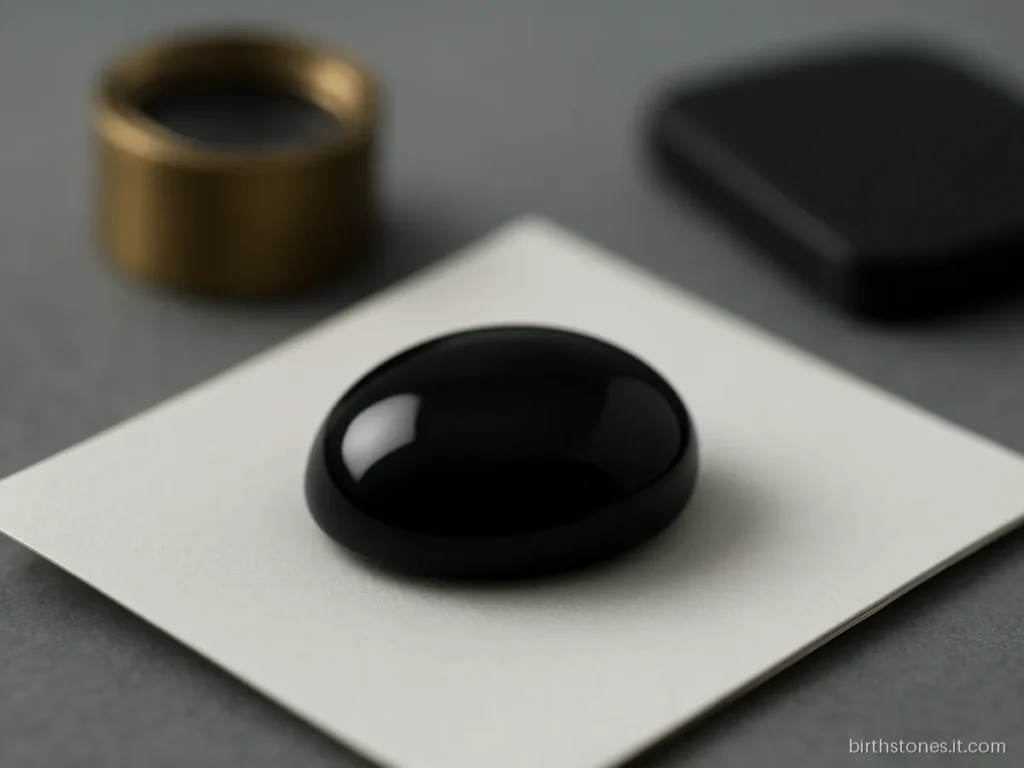
Onyx stone price is set less by rarity and more by workmanship: how even the colour is, how bright the polish is, the size and cut, any carving or banding, and the metal around it. Chalcedony is plentiful, so two black onyx rings that look alike can differ in cost mostly because of finish, labour and the seller's margin.
No figures appear here; onyx rates drift and one counter rarely matches the next. What follows is a checklist for judging the piece, decoding a written quote and setting two offers against each other on equal terms.
Comparing two onyx quotes, step by step
- Make both sellers name the material
Each bill should say chalcedony or onyx, with dyed if it is dyed. A quote that only says black stone is not comparable.
- Match the weight unit
Shop A may write carats while shop B writes ratti. Find out how many carats their ratti equals, then bring both to one unit.
- Separate stone, metal and making charge
For a ring or pendant, get the stone, the metal weight and the labour as three lines. Often the silver or gold is the larger share.
- Hold the two pieces together in daylight
Compare blackness, grey patches, polish and chips. The cleaner, brighter stone usually earns a higher price.
- Check return and exchange terms
A fair seller will let you return a stone that a lab later shows is glass or calcite. Get that promise in writing.
Why onyx stone price varies so much
Gem prices usually follow scarcity. Onyx is different: chalcedony is mined in large amounts in Brazil, Uruguay and India, and it is dyed in bulk. So the stone itself is rarely the costly part. What you pay for is the cutting, the polish, the matching of beads in a strand, any hand carving, and the metal and design around it.
That is also why onyx bought at a big showroom can cost several times what a near identical bead strand costs at a gem bazaar in Jaipur or Khambhat. Both may be fair for what each seller offers in service, return policy and setting quality.
Factors that raise or lower the price
| Factor | Pushes price up | Pushes price down |
|---|---|---|
| Colour | Jet black or even green, no patches | Grey zones, blotchy dye near cracks |
| Polish | Mirror shine, sharp reflections | Dull spots, pits, orange peel surface |
| Size | Large clean single pieces | Small calibrated stones |
| Cut | Faceted, carved, cameo, matched sets | Simple cabochon or plain bead |
| Banding | Crisp straight black and white layers | Wavy, faint or broken bands |
| Damage | None | Chips at the girdle, cracks, worn drill holes |
| Setting | Gold, fine handwork | Base metal, glued settings |
Sardonyx, with natural red brown bands, and well made cameos sit at the higher end, since they need good rough and skilled hands.
Dyed onyx and natural colour
Almost all black onyx is chalcedony that has been soaked in a sugar solution and then treated with acid or heat so carbon fills the pores. Green onyx is usually dyed with metal salts. This is an old practice, stable in normal wear, and it does not by itself make a stone cheap or bad. It does mean that a seller charging extra for natural untreated black onyx should be able to prove it with a lab report. Naturally black chalcedony exists, but you will rarely meet it.
Natural, lab made and imitation onyx
Chalcedony is cheap enough that nobody grows it in a lab. What you may find instead are imitations:
- Black glass: heavier feel than plastic, but shows bubbles and mould seams.
- Resin or plastic: light, warm, can show tiny scratches everywhere.
- Calcite sold as green onyx: real stone but soft, about 3 Mohs; good for decor, poor for rings.
- Black agate or obsidian: real stones, sometimes mixed in strands; obsidian is softer and shows a glassy break. See obsidian.
None of these should be sold at onyx prices without being named.
Reading an onyx quote
A good written quote tells you the stone name, colour, any treatment, weight in carat or ratti, size in millimetres, cut, and for jewellery the metal purity and metal weight. Since rates move and no two counters agree, gather at least three written quotes first. If an astrologer has suggested green onyx as an upratna, the weight they named matters more than a fancy cut, so ask for that weight first. What a lab paper can confirm for a low cost stone, and where it stops, is set out under gemstone certificate.
Red flags in an onyx sale
- Very high quotes for so called energised or certified onyx with a certificate printed by the shop.
- Green onyx priced near emerald levels.
- Black or green that transfers to a wet tissue.
- No bill, or a bill without the stone name.
Getting good value from onyx
Pick the size and look you like, check the polish in daylight, and spend on a sound setting rather than on stories. If the stone is for astrology, buy the weight your astrologer suggested and get the mineral name on paper. For the stone itself, read the onyx stone guide, and for the beliefs attached to it, the onyx benefits page. Similar value questions for agate are covered in hakik stone price.
Questions people ask
Why is onyx so cheap compared with other gems?
Chalcedony is plentiful and easy to dye, so the raw material costs little. Most of the price lies in cutting, polish and setting.
Do jewellers weigh onyx in carats or ratti?
Single stones are often quoted by carat or ratti, whereas bead strings and carvings usually carry one tag for the whole item. Confirm the carat equivalent of the seller's ratti.
Does dyed onyx cost less than natural?
Nearly all black onyx is dyed, so dyed is the normal market price. Naturally black chalcedony is rare and would need a lab report to justify any extra charge.
Why does green onyx cost differently at two shops?
The stone may differ in colour and polish, or one may be soft calcite. Shop rent, setting quality and margin also differ, so compare the bills line by line.
Should I get a lab certificate for onyx?
For a small, inexpensive stone the test may cost more than the gem. For a large carved piece or a costly set, an independent lab report confirming chalcedony is sensible.