
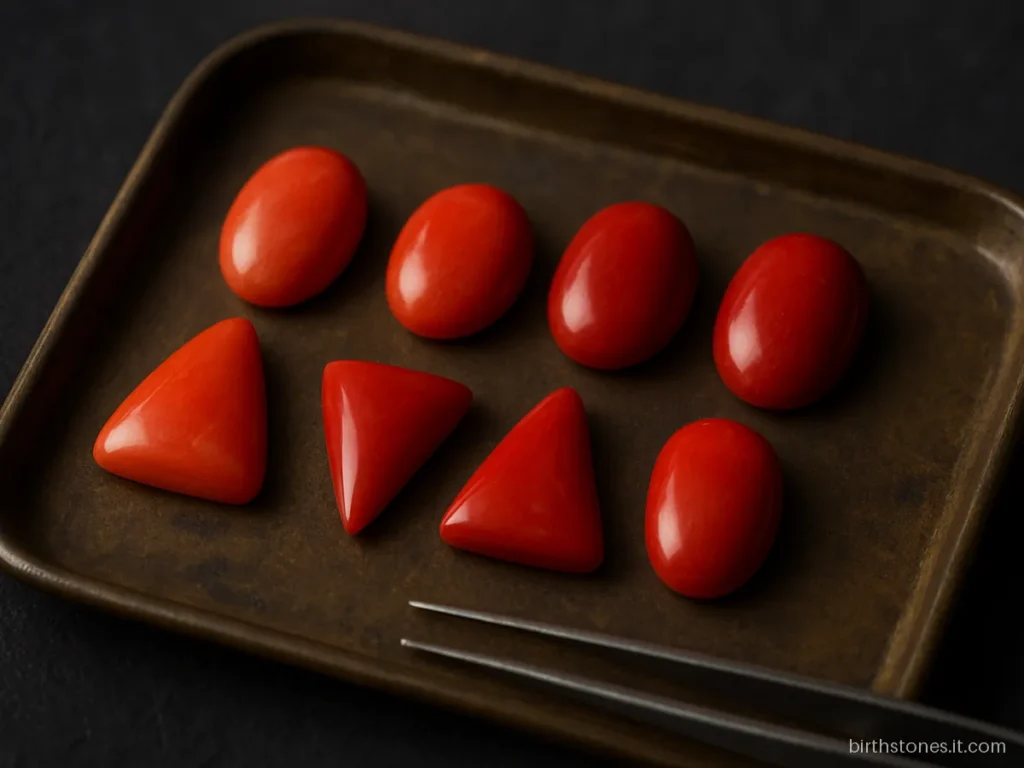
A moonga stone price is driven by colour depth and evenness, a clean surface without pits or cracks, the shape and weight, and whether the coral is solid natural precious coral or dyed, filled or rebuilt from powder. Two red stones that look alike from across a counter can have very different value.
No amounts are given here, because coral supply is tight and swings, and no two sellers think alike. Instead, here is how to judge a quote and compare offers. For basic facts first, read the moonga stone guide.
Checking a moonga before paying
- Ask what kind of coral it is
Precious red coral, Japanese coral, sponge coral and bamboo coral differ a lot in value. The bill should name it.
- Get the weight in carat as well as ratti
Find out the shop's ratti value, and make sure carats appear on the invoice.
- Inspect pits and cracks under a loupe
Note whether colour is darker inside pits, which points to dye.
- Compare against another stone in daylight
Hold two corals side by side near a window to judge depth and evenness of colour.
- Keep the report and bill together
If anything later looks wrong, both papers help you raise it with the seller.
What decides a moonga stone price
| Coral feature | Better grade | Poorer grade |
|---|---|---|
| Colour | Deep, even red or rich orange red | Pale, blotchy or with white patches |
| Surface | Smooth, few pits, no cracks | Many pits, worm holes, cracks |
| Shape and cut | Well proportioned oval or triangle, good polish | Lopsided, flat, poorly polished |
| Size | Large solid pieces are scarce | Small pieces, thin slices |
| Coral type | Solid precious coral | Sponge or bamboo coral |
| Treatment | Undyed and unfilled | Dyed, waxed or resin filled |
Large pieces of clean, deep red precious coral are the hardest to find, because coral branches are thin and often hollow or pitted.
Munga ratna price and the ratti weight
Most sellers quote munga ratna price by ratti, because that is how astrologers state weight. The carat is a fixed metric weight of 200 milligrams; the ratti, by contrast, has several local values. The figure most often used puts a ratti at 0.91 carat, but do not assume it. A search like original moonga stone price 7 ratti only makes sense once you know which ratti the shop means, so turn every weight into carat first.
Italian, Japanese and other coral in a quote
Sellers often name the source because buyers ask for it. Italian or Mediterranean coral is usually a bright orange red. Japanese coral is deeper red and may carry a pale core. Both can be fine or poor quality, so the label alone does not justify a higher quote. Request a second coral of another type for a side by side look, then judge colour and surface yourself.
Dyed, filled and imitation coral
- Dyed coral: pale or white coral coloured red; colour collects in cracks and may rub off on cotton.
- Sponge coral: naturally porous, filled with resin and dyed; you can see tiny holes under a loupe.
- Bamboo coral: shows jointed bands; usually dyed.
- Reconstructed coral: coral powder pressed with resin; colour is too even.
- Glass and plastic: bubbles, mould lines, light weight.
Each of these should cost far less than solid natural red coral. A test report that states natural, undyed precious coral protects you.
Pavalam and marjan stone price in other regions
In the south, the same gem is sold as pavalam, and older North Indian and Urdu speaking families may ask for marjan. Any pavalam stone price or marjan stone price rests on the familiar points: colour, surface, shape, weight, type and treatment. Coral bead strands are often priced as a whole, so ask for the bead count, size and total weight.
Warning signs when buying moonga
- Every piece on the tray is the same flawless shade of red.
- Colour comes off on a white cloth wiped lightly over the stone.
- The seller cannot say what kind of coral it is.
- A ratti weight is given with no carat figure.
- You are told to do a vinegar test at home, which harms real coral.
Coral rates rise and fall, and every shop sets its own margin. Visit several sellers and compare written quotes before buying.
Questions people ask
What affects moonga stone price the most?
Colour and surface come first, then shape and weight. Whether the coral is solid, undyed precious coral matters a great deal.
Is Italian moonga always costlier than Japanese?
Not always. Each type ranges from poor to fine, and quality decides value more than the label.
Why would two shops quote differently for a seven ratti moonga?
Each shop may count a ratti differently and grade coral differently. Put both weights into carat and read both reports.
What gives away a dyed coral?
Look for darker colour in pits and cracks, and see if colour rubs off on white cotton. A lab report can confirm it.
What does munga ratna ki price depend on?
It depends on colour, surface, shape, weight, the type of coral and any treatment. Rates also differ by seller.
Is a cheap coral bead strand real?
It may be sponge, bamboo, reconstructed coral or plastic. Ask what material it is and get that written on the bill.