
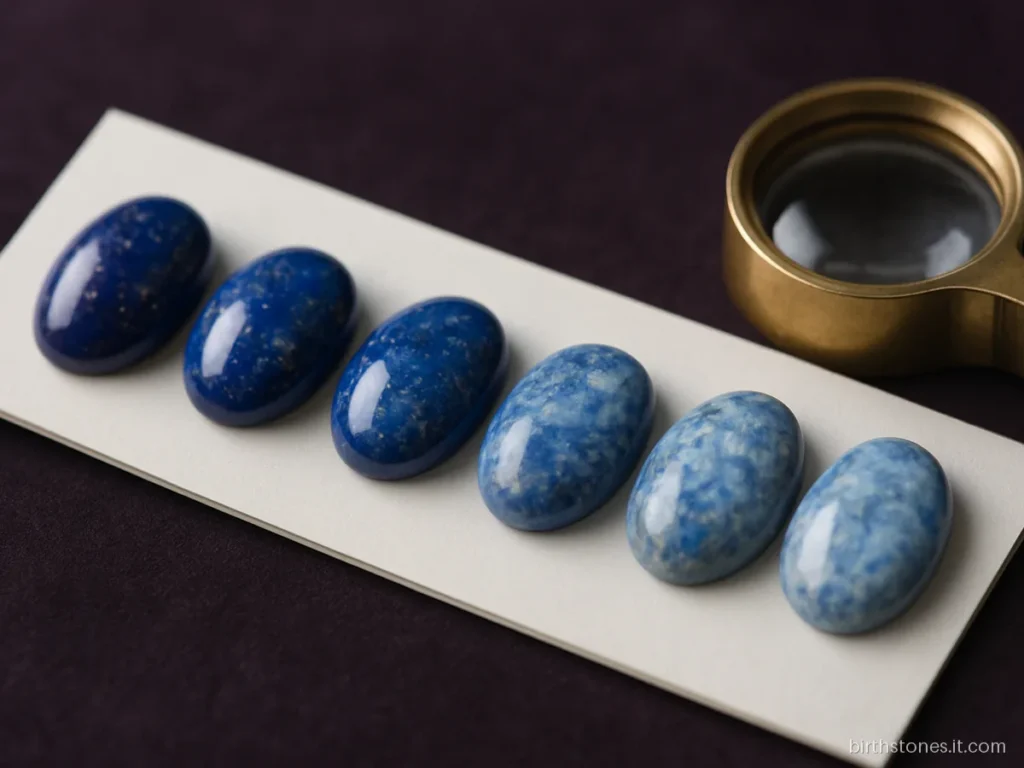
Lajward stone price rests largely on how deep and even the blue is, how much white calcite and gold pyrite the stone shows, and whether it has been dyed or stabilised. After that come size, cutting, any origin story and the shop's own margin. A deep, even blue piece from good rough sits far above a pale, patchy or dyed one of equal size.
We avoid figures, because they shift and every seller sets their own. The page covers what a fair quote reflects, how to compare two offers for the same lapis lazuli stone, and which warning signs to take seriously. For background, see the lapis lazuli guide.
Comparing two lapis quotes
- Put the stones under the same light
Colour drives value most, so compare in daylight, side by side, not under shop spotlights.
- Count the white
A stone with less calcite and even blue is the stronger offer, even if slightly smaller.
- Check the treatment line
Dyed, waxed and stabilised pieces should be priced below natural ones. Ask for this in writing.
- Confirm the weight unit
Get weight in carat; where a shop quotes ratti, check the conversion it uses.
- Split stone and metal
For a ring or pendant, ask for the lapis and the silver or gold charges separately.
What decides lajward stone price
- Depth of blue: intense royal blue, slightly violet, is the top grade. Pale, greyish or greenish blue is lower.
- Evenness: one smooth colour across the stone is valued above patchy colour.
- Calcite: little or no white is preferred; large white patches lower value.
- Pyrite: fine, evenly spread gold flecks are fine and often liked; big brassy blotches are not.
- Treatment: natural material is worth more than dyed, waxed or resin stabilised lapis.
- Size and form: large clean slabs for carving or inlay are scarce.
- Cut and polish: a smooth, even polish without pits takes skill on this soft stone.
- Seller margin: rent, branding and setting work differ by shop.
Lapis lazuli stone price and treatment
Many lapis pieces are treated in ways that are accepted but must be disclosed. Dye is used to deepen pale blue or hide calcite. Wax or oil improves shine. Resin stabilising strengthens crumbly material. Reconstituted lapis is powder bound with resin into blocks. Each step lowers value compared with a natural stone of similar look. Get the treatment noted on your invoice, and consider a lab report for any costly piece.
If the white veins in a lapis look faintly blue, the stone has probably been dyed.
Lapis stone price and imitations
The cheapest blue beads sold as lapis are often dyed howlite or dyed jasper. These have their own fair value as dyed stones but should never be priced as lapis. Sodalite is genuine and natural, yet it is a separate mineral that deserves its own label. Glass with copper glitter sometimes appears as lapis in fashion jewellery.
| What you are shown | Honest label | Price compared with lapis |
|---|---|---|
| Bright blue beads, white web veins | Dyed howlite | Much lower |
| Patchy blue with clear spots | Dyed jasper | Much lower |
| Darker blue with many white veins | Sodalite | Usually lower |
| Even blue, grainy texture | Reconstituted lapis | Lower |
| Even blue, glitter, bubbles | Glass | Lowest |
Origin claims and value
Afghan lapis has the best name, and sellers often quote higher for it. Fine Afghan material can indeed show the most prized colour, but origin cannot be read from the stone by eye, and Chilean or Russian lapis of good colour also exists. Pay for the colour and finish in front of you, and treat origin as the seller's information unless a lab report says otherwise.
When a lajward needs a lab report
For a cheap bead string, a report may cost more than the piece. For a large cabochon, a carving, or any stone priced as top quality natural lapis, an independent gem lab can confirm the material and detect dye or resin. Read our gemstone certificate page to understand what the report says.
Warning signs in a lapis quote
- Uniform electric blue with no pyrite at all, sold as natural.
- White veins tinted blue.
- A seller who will not say whether the stone is dyed.
- Promises of luck, success or health with the purchase.
- A ring bill with no separate stone and metal amounts.
- No option to return after outside testing.
Lapis quotes are never fixed, so gather three or more offers and file the invoice safely. The blue gemstones page helps if you are still choosing between lapis and another blue stone, and lapis beliefs covers why people wear it.
Questions people ask
Why do lajward stone prices vary so much?
Lapis ranges from deep even blue to pale and patchy, and much of it is dyed or stabilised. Those differences, plus seller margins, explain wide gaps.
Does more gold pyrite mean higher lapis lazuli stone price?
Not usually. A little fine pyrite is liked, but heavy pyrite patches lower value.
Is Afghan lapis always better?
Afghan lapis has the best reputation, but quality varies inside every mine. Judge the colour and finish of the stone itself.
How is lapis stone price affected by dye?
Dye pulls the value well below an untreated stone that looks alike. Request the treatment status on paper.
Is cheap lapis fake?
Not always, as low grade natural lapis exists. But very cheap bright blue beads are often dyed howlite or jasper.
Should I buy lapis by carat or by piece?
Small ring stones are often sold by carat or ratti, larger cabochons and carvings by piece. Either is fine if weight and quality are stated.